
Credit card price protection refunds you the difference if something you bought with your card drops in price shortly afterward. It used to be a common perk. Today it is rare: only 4% of cards from the 10 largest U.S. issuers offer it, down from 52% in 2017. So the practical question is no longer which card to carry, but how to get your money back when a price falls and your card does not help.
TL;DR
- Price protection pays you back when an item you already bought gets cheaper. Purchase protection is different: it covers damage or theft.
- The benefit has nearly disappeared. Chase cards do not offer it, and WalletHub's 2025 review found Capital One was the only top-10 issuer still offering it.
- Where it exists, expect short windows, per-claim caps, claim limits and paperwork. Mastercard's standard 120-day terms, for example, cap a claim at $250.
- Without it, your best moves are a store's own price adjustment policy, a price alert set before you buy, and watching the price right after you buy.
Table of Contents
- What credit card price protection actually is
- Price protection vs. purchase protection
- Why almost no card offers it anymore
- How a claim works, with a real example
- Retailer price adjustments are not the same thing
- What to do when your card has no price protection
- Is a price-protection card worth chasing?
- Track prices instead of filing claims
- A short routine for big purchases
- FAQ
- Sources
What credit card price protection actually is
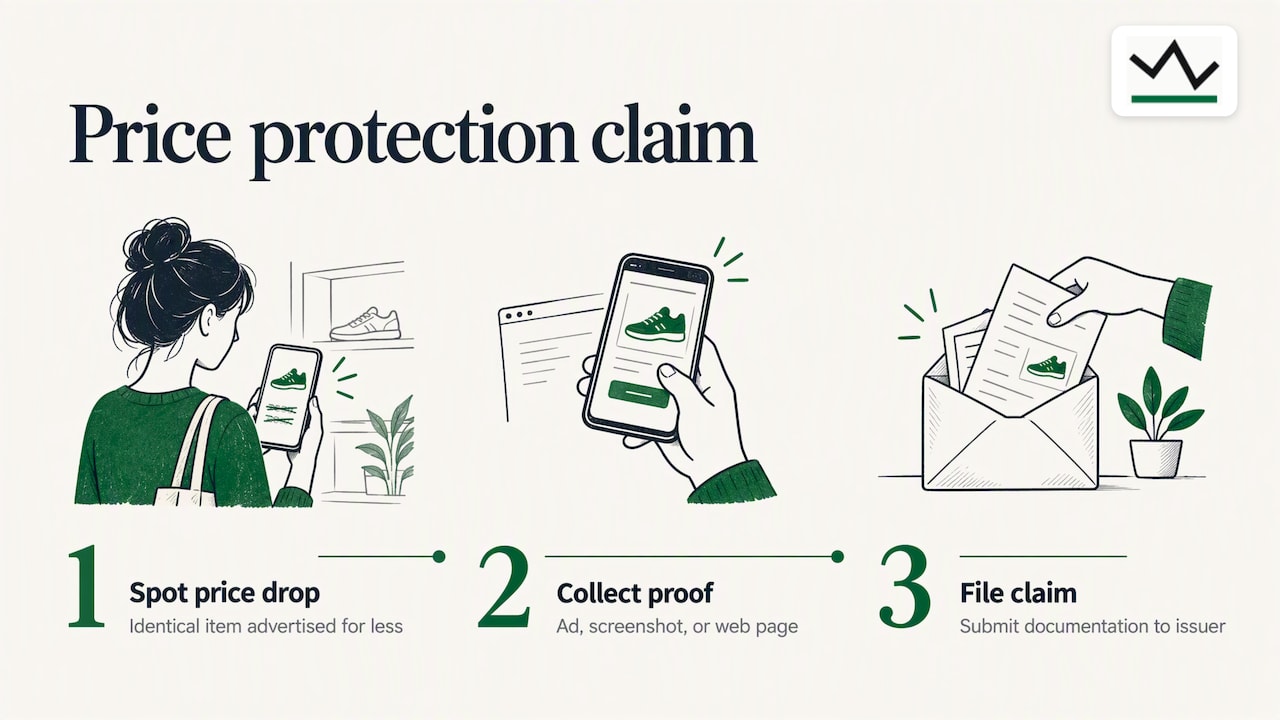
Price protection is a benefit some card issuers attach to certain cards. If you buy an eligible item and the same item is advertised for less within a set number of days, the card may refund the difference. You are not refunded the full price, only the gap between what you paid and the lower advertised price.
The key word is "advertised." You prove the lower price with an ad, a screenshot or a web page, and the lower price generally has to come from a legitimate retailer selling the identical item. That is why the benefit has always been paperwork-heavy: it is on you to spot the drop, collect proof and file.
That last point matters more than it looks. Price protection typically requires cardholders to track price drops and file a claim with documentation. Your card never watches prices for you.
Price protection vs. purchase protection
The two names sound almost identical, and issuers do not help. They solve different problems.
| Price protection | Purchase protection | |
|---|---|---|
| What it covers | A price drop on something you already bought | Eligible items that are damaged or stolen |
| What triggers a claim | The same item advertised for less | Damage or theft after purchase |
| What you prove | Receipt, statement, proof of the lower price | Receipt, statement, proof of the loss (police report for theft is common) |
| How common today | Very rare | Offered on some rewards cards |
The split comes straight from Chase's explanation of the two benefits: price protection covers price drops, while purchase protection covers eligible items against damage or theft. Some rewards cards still offer the second one.
So if your card guide lists "purchase protection" and you were hoping for a refund when your TV went on sale, it will not pay. And if you want coverage for a laptop that cracks in week three, price protection will not help either.
Purchase protection windows are usually measured in weeks or a few months from the purchase date, and the benefit comes with per-claim and yearly caps. Read your card's guide to benefits for the exact figures, because they differ by issuer and card.
A related risk sits before the purchase even begins. If a package is lost or stolen in transit, that is a shipping problem rather than a card benefit, and a separate shipping protection for orders add-on is one way some shoppers cover it at checkout.
Why almost no card offers it anymore
In 2017, just over half of cards from the largest issuers included price protection. By 2025, WalletHub put the figure at 4%. As of November 2025, Capital One was the only top-10 issuer still offering it, and Chase says outright that its cards do not.
The Points Guy suggests one cause: automated price-tracking and claim-filing services made it too easy to file claims at scale, so many issuers dropped the perk. The same piece notes that travel cards often make up for it with other protections such as trip cancellation coverage.
Two practical lessons follow:
- Do not choose a card for price protection alone. It may not be there next year, and a benefit that disappears is not worth an annual fee.
- Check your current card, not an old article. Lists written years ago, including several that still rank on Google, describe a market that no longer exists.
How a claim works, with a real example
If your card does include the benefit, the process looks like the standard terms Mastercard has published. Those terms are a useful template, though your own card's guide to benefits is what counts, and it may differ.
Under Mastercard's standard 120-day price protection terms:
- You report a claim within 60 days of the incident.
- Coverage is up to $250 per claim.
- Auctions, perishables and motorized vehicles are excluded.
- You can file up to four claims per cardholder account in a 12-month period.
For a claim, you need a receipt, a statement showing the purchase, and evidence of the lower advertised price. Many cards also limit coverage to items bought within the United States.
Here is what that means in dollars. Say you pay $180 for headphones, and 20 days later the same model is advertised at $149. Your potential refund is the $31 difference, not $149, and only if the ad meets your card's rules. At that scale, the time spent documenting a claim is a real cost, which is another reason issuers saw so many small claims.
How to check whether your card has it
- Open your card's guide to benefits (usually a PDF in your online account) and search for "price protection."
- Look at the window, the per-claim cap, the yearly claim limit and the exclusions.
- Call the number on the back of the card if the guide is unclear.
The Points Guy also notes that some issuers do not publicly advertise the benefit, and regional banks or credit unions may still provide it. If you bank with a smaller institution, ask directly rather than assuming the answer is no.
Retailer price adjustments are not the same thing
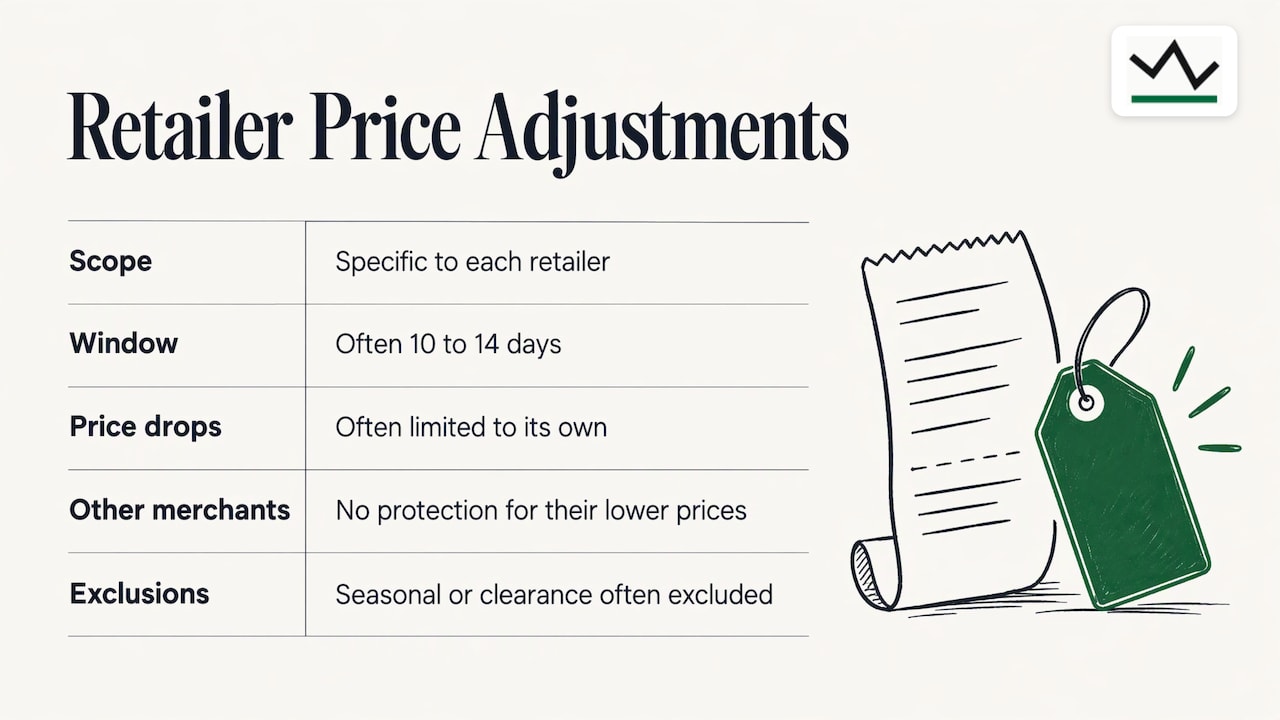
Many stores will adjust a price if an item you bought drops soon after. That is a retailer policy, not a card benefit, and it works differently. Store policies are specific to that retailer, often limited to its own price drops, and may run only 10 to 14 days. They also do not protect you if a different merchant lowers its price.
Forbes Advisor also points out that retailers often exclude categories such as seasonal or clearance merchandise. Always read the exclusions before assuming a refund is coming.
For a concrete example of how narrow these policies can be, see our breakdown of Target's price match rules for U.S. shoppers, including the 14-day window and the fact that it does not match Amazon.
What to do when your card has no price protection
The good news is that you can replicate most of the benefit yourself, and often do better, because you act on the drop before the window closes.
Before you buy
The cheapest refund is the one you never need. Check whether today's price is actually good before you pay. Our guide on how to check price history for 90-day and 365-day lows shows how to tell a real low from a price that was inflated before a "sale." You can also run an item through our check of Amazon's "was" prices to see whether the claimed discount is real.
Prices also move for reasons unrelated to sales. If you are curious why the same item costs different amounts at different times, read how dynamic pricing works online and how to avoid overpaying.
Right after you buy
Most price drops that matter happen in the first few weeks, which is also when return windows are open. That makes the post-purchase period the right time to keep watching.
- Keep the receipt and order page. You need the date and exact price for any adjustment request.
- Note the return deadline. Returning and rebuying at the lower price is sometimes the simplest route, where the retailer's policy allows it.
- Set an alert on the item you just bought. A tracker watches the price so you do not have to.
- Ask for the adjustment fast. Store policies are short, so contact customer service the day you see the drop, with a screenshot.
Search engines also offer price-tracking alerts that email you when a price falls. They are a free starting point for casual shoppers.
Verify the drop is real
A drop only helps if it is real and lasts. Our guide to Amazon price alerts explains how to verify drops against up to a year of price data, so you know whether a new low is a genuine bargain or a brief dip. If you shop by size or quantity, the five steps to compare unit prices using price history will help you judge the real cost per unit.
Is a price-protection card worth chasing?
For most shoppers, no. Consider the trade-offs:
- Rare: with only a sliver of major cards offering it, you would be limiting your choice of card for a benefit with a $250-per-claim ceiling at best.
- Effortful: you must find the lower price, document it and file before the deadline.
- Conditional: exclusions, U.S.-only purchases and short windows narrow what qualifies.
If you already hold a card that includes it, use it. Put it on your calendar to check prices for the whole window after big purchases. If you do not, a decent rewards card with solid purchase protection plus your own price tracking covers more ground in practice.
Our perspective
We built BasketPrice around a simple observation: the price you pay matters most at the moment you pay it, and the shopper rarely has the information to judge it. Card price protection tried to fix the second half of that problem by refunding you after the fact. It has mostly gone away, and the work of watching prices has landed back on the shopper.
That is why we publish price records based on our own collected price history, not on what a merchant says an item used to cost. A "was" price in an ad is a claim. A price we recorded ourselves is a data point. When you decide whether to buy now or wait, we think you should be looking at the second kind.
We also built alerts around what happens after checkout. Our alerts include triggers such as a price drop after purchase while you are still inside a return window, and they work through browser notifications with no sign-up required. The idea is to give you the useful part of price protection, knowing about the drop in time to act, without depending on a card benefit that may not exist.
Price protection was never really about the refund. It was about not feeling punished for buying too early. A tracker that tells you what the price has actually done removes most of that worry.
Cleaning
Track prices instead of filing claims
If your card cannot watch prices for you, let a tracker do it. BasketPrice records prices on Amazon products and lets you set alerts for price drops and back-in-stock moments, so you hear about a change as it happens and still have time to ask for an adjustment or return the item.
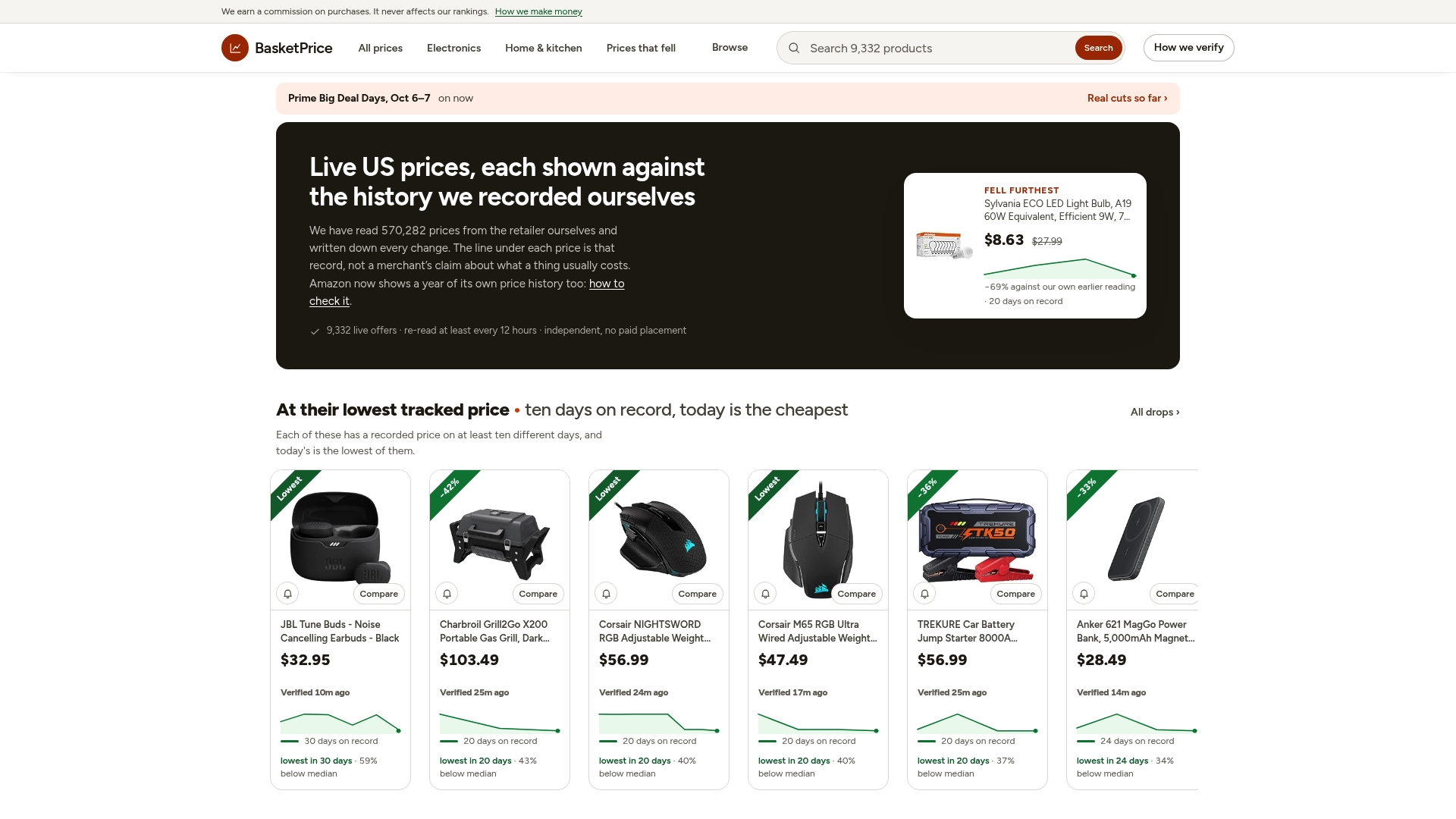
Start with our Amazon price tracker with price drop alerts, or browse thousands of Amazon prices compared with their own history to see what a normal price looks like before you buy. If you are shopping in a particular category, our pages for electronics, sports and outdoors gear and car products show typical price ranges and history.
A short routine for big purchases
For anything over, say, $100, a repeatable routine beats relying on any one benefit:
- Check the price history before paying.
- Confirm your card's benefits: purchase protection, extended warranty and, if present, price protection.
- Pay with the card whose guide to benefits you have actually read.
- Save the receipt and screenshot the product page.
- Set a price alert for the item.
- Review the price again before the return window and the store's adjustment window end.
This takes ten minutes up front and often saves far more than a rarely available card perk would.
FAQ
Do credit cards still have price protection?
A few, but very few. WalletHub's 2025 review found that only 4% of cards from the 10 largest U.S. issuers offered it, and Capital One was the only one of those issuers still offering it as of November 2025. Chase cards do not. Check your own card's guide to benefits, and ask smaller banks and credit unions, which may still provide it.
What is the difference between price protection and purchase protection?
Price protection refunds the difference when something you bought later drops in price. Purchase protection covers eligible items against damage or theft. They address different risks, so a card with one does not necessarily have the other.
How much can I get back with price protection?
It depends on the card. Under Mastercard's standard 120-day terms, coverage is up to $250 per claim and up to four claims per account per 12 months, and you must report within 60 days. You are refunded the price difference only, not the full price, and some categories such as auctions and perishables are excluded.
What can I do if my card has no price protection?
Ask the retailer about its price adjustment policy right away, since windows are often only 10 to 14 days. Set a price alert on the item you bought so you hear about drops early. Also check whether you can return the item and rebuy it at the lower price within its return window.
Sources
- What Is Credit Card Price Protection? | Chase
- Best Credit Cards for Price Protection | WalletHub
- The best credit cards with price protection | The Points Guy
- Mastercard price protection standard 120-day coverage guide
- What Is Price Protection And What Credit Cards Have It? | Forbes Advisor
- Shipping protection for orders