

You can see a Target item's price history by using a price-history browser extension, a price-tracking site that accepts Target product links, or your own log of the price over time. Target's product page shows today's price and sometimes a crossed-out earlier price. It doesn't show a timeline. This guide covers each method, how to judge whether a "sale" is real, why the price you see may not match a friend's, and what to do after you buy.
TL;DR
- Target's own page shows the current price, not a chart. To see past prices, use a browser extension or a tracker that accepts Target links, or build your own log.
- A crossed-out price tells you little. The FTC's standard is that a former price must have been offered regularly for a reasonably substantial period, and there is no federal limit on how long a sale can run.
- Store, app and location can all change the price you see, especially on clearance.
- Target ended competitor price matching on July 28, 2025. It will still match its own lower price within 14 days of purchase.
- For the same item on Amazon, BasketPrice shows price records from its own readings, which helps you benchmark a Target price.
Table of Contents
- What Target shows you, and what it doesn't
- Method 1: A browser extension that records prices as you shop
- Method 2: A tracker that takes a product link
- Method 3: Build your own record
- Is a Target price drop a real deal?
- Why your Target price may differ from someone else's
- How to set a price alert for a Target item
- After you buy: Target's price match rules
- Our perspective
- Put the benchmark to work
- A simple routine for any Target purchase
- FAQ
- Sources
What Target shows you, and what it doesn't
Open any Target product page and you get the current price. Sometimes you also get a "reg" price with a strikethrough. That reference price is the retailer's own statement. It isn't a record of what the item actually sold for last month.
That gap is why shoppers search for price history. A crossed-out number can reflect a list price or an earlier price, not the recent everyday selling price. To judge a deal, you need the sequence of prices: what the item cost two weeks ago, in the spring, and around the last big sale event.
Three routes get you there. We take them in order of effort.
Method 1: A browser extension that records prices as you shop
The fastest route is a browser extension that works on Target and other big retailers. AARP's guide to tracking price changes describes the typical flow. You hover over the extension icon on a product page and click the price-history option. A chart appears showing the item's price over weeks or months. You can then add the item to a watch list and get an email when the price drops.
Things to keep in mind when you use one:
- Check the chart's range. A two-week chart can make a regular price look like a bargain. Look for at least several months of data.
- Look at the low, not just the trend. The question is whether today's price is near the lowest point the item has hit.
- Match the exact item. Different sizes, colors and bundles often have separate listings and separate histories.
If you're already using a coupon extension and want a tracker with its own recorded history, our comparison of options for price tracking explains how the approaches differ.
Method 2: A tracker that takes a product link
Some price-tracking sites let you paste a product link and see the stored history for that item, then set a target price and get a notification when it's reached. These tools vary a lot in how much history they hold. They also vary in how many retailers they cover and whether the data comes from their own readings or from merchant claims.
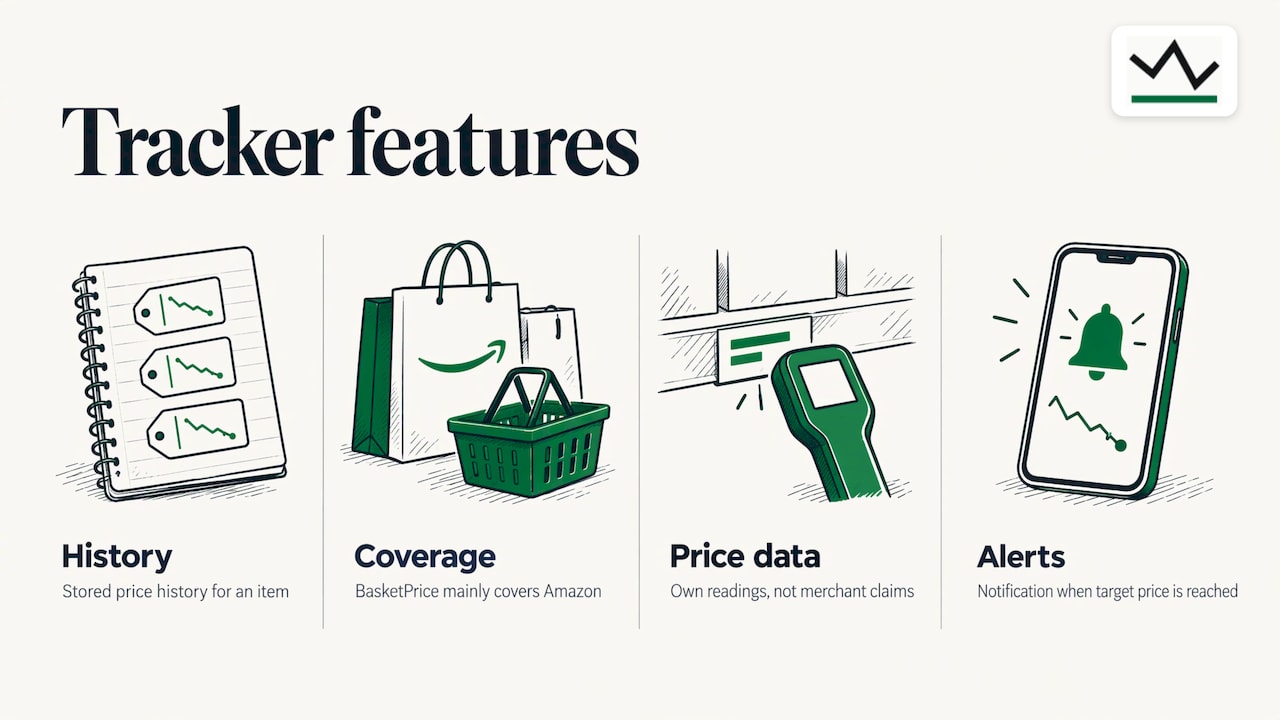
That last point matters. A price record built from the tracker's own repeated readings shows what the price was. A record that leans on what a merchant says the "original" price was just repeats the claim you're trying to check.
This is how we built BasketPrice. Our price records come from our own collected readings, not merchant claims. Our main coverage is Amazon, so the strongest use for Target shoppers is a cross-check. Many Target items, especially electronics, home goods and outdoor gear, are also sold on Amazon. If the same model has a 90-day or 365-day low on Amazon that is well below Target's current price, you know the benchmark. Our guide to checking price history for 90-day and 365-day lows walks through the process. For a retailer-by-retailer view of big-box stores, see how to see Walmart price history, which uses the same logic.
Method 3: Build your own record
For a single big purchase, a manual log works and costs nothing. It takes about two minutes a week.
- Copy the product's page link into a note or spreadsheet.
- Record the date, the displayed price and any "reg" price shown.
- Note whether you checked in the app or on the website, and which store was selected.
- Check again weekly, and also the day a major sales event starts.
- After four to six weeks, you have a floor price and a typical price.
A log is more work than a chart, but it makes you aware of the one thing no extension can see: the price at your store.
Is a Target price drop a real deal?
A drop only counts if you know what the price was before it. Use this checklist.
Compare across time
The reporting on the FTC's position says you should compare prices at a variety of stores over time. The same piece notes a 2015 study that found some stores ran perpetual sales, so the discounted price had effectively become the regular price.
Know the rule behind "was" prices
The FTC's guidelines against deceptive pricing say a product can be advertised at a reduced price if the former price was a bona fide price offered to the public regularly for a reasonably substantial period. According to NBC News's coverage of that guidance, there are no specific federal rules on how long a sale may run. So "was $60, now $40" is a claim to verify, not a fact.
Run the three-part test
| Check | What you're looking for | Good sign |
|---|---|---|
| Recent history | Price over the last 90 days | Today's price is at or near the low |
| Longer history | Price over the past year | Sale price is below the typical price, not the same as it |
| Other sellers | Same exact item elsewhere | Target's price is at or below the others |
If the "sale" price has been the price for most of the past year, it's the regular price with a sticker on it. The same logic works for any retailer. Our piece on Amazon vs. Walmart prices shows how the cheaper store changes by product and by season.
Why your Target price may differ from someone else's
You check a price, a friend checks the same item, and the numbers don't match. That is normal at Target, for a few reasons.
- Store-level clearance. Clearance and markdown pricing can be localized to individual stores, so one store may be at a markdown while another still has the regular price.
- App location. Target's app uses location data. Business Insider reported in 2019 that in-store prices resembled store prices, while away from the store the app showed prices like Target.com.
- Availability and promotions. A listing can change when stock runs out, when a bundle ends or when a Circle offer starts.
For your records, write down which store you had selected and whether you used the app or the site. Otherwise a "price drop" in your log may just be a different location. A chart built from one retailer page reading is a good guide, but your local shelf can still be different. If an item matters, confirm the price in the app set to your store before you go.
How to set a price alert for a Target item
Target's price changes often enough that waiting for an alert beats checking daily. Whatever tool you use, set it up this way:
- Pick the exact item. Open the product page and copy the link, so the alert is tied to one listing.
- Choose a threshold. Use the lowest price from your history check, or a price a bit above it if you want to buy sooner.
- Choose the notification type. Email works for patient purchases. Browser notifications work for fast-moving deals.
- Add a back-in-stock alert if the item sells out often.
- Re-check before buying. An alert tells you to look, not that the price is final. Confirm the price and the seller at checkout.
On BasketPrice, you can use browser notifications for price alerts with no sign-up required. You can also set custom price-drop and back-in-stock alerts. Our alerts also include triggers for post-purchase price drops within return windows, which matters for the next section. Our guide to verifying Amazon price drops with up to a year of data shows how that works for items sold on both stores.
After you buy: Target's price match rules
The rules changed recently. Target ended its long-standing competitor price matching on July 28, 2025, so a lower Amazon or Walmart price no longer gets you a match. The same report says an eligible identical item bought in the past 14 days can still be matched to a lower Target.com or local Target store price.
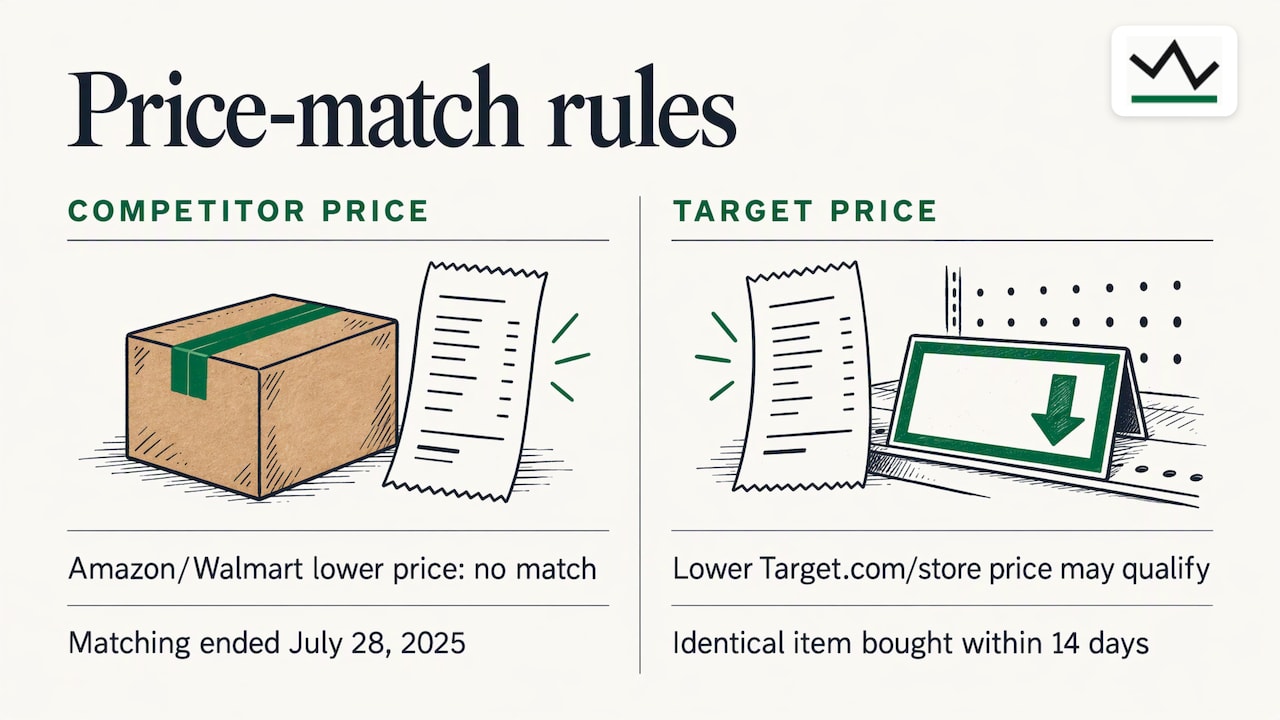
That 14-day window turns price history into a refund tool. If you buy and the price falls within two weeks, you can ask for the difference. Keep your receipt and a screenshot of the lower price, and see the current terms on Target's own price match page. Our walkthrough, Target price match for U.S. shoppers, covers the 14-day rule step by step.
Our perspective
Price history is only as good as where it comes from. A chart built on a merchant's "original price" repeats the merchant's story. That's why BasketPrice publishes records from its own collected readings: you see what the price actually was, not what a listing says it used to be.
We think the best shopping habit is simple. Look at the 90-day and 365-day lows before you decide. Set an alert at the number you'd be happy with. Then let the price come to you. That takes the pressure out of sales events, because you already know what a good price looks like.
We also believe the alert should keep working after checkout. Return windows and price-adjustment windows give you a second chance at a lower price, so our alerts include post-purchase price drops within those windows. Our coverage is centered on Amazon, which makes BasketPrice a strong benchmark for any item that's sold in both places.
Cleaning
Put the benchmark to work
If the Target item you want is also sold on Amazon, check its recorded price history first. You'll see the recent low and whether today's price is a deal. Browse current prices by category: electronics, smart home, sports and outdoors and car accessories. Or start at the price tracker home page, find your item and set a drop alert.
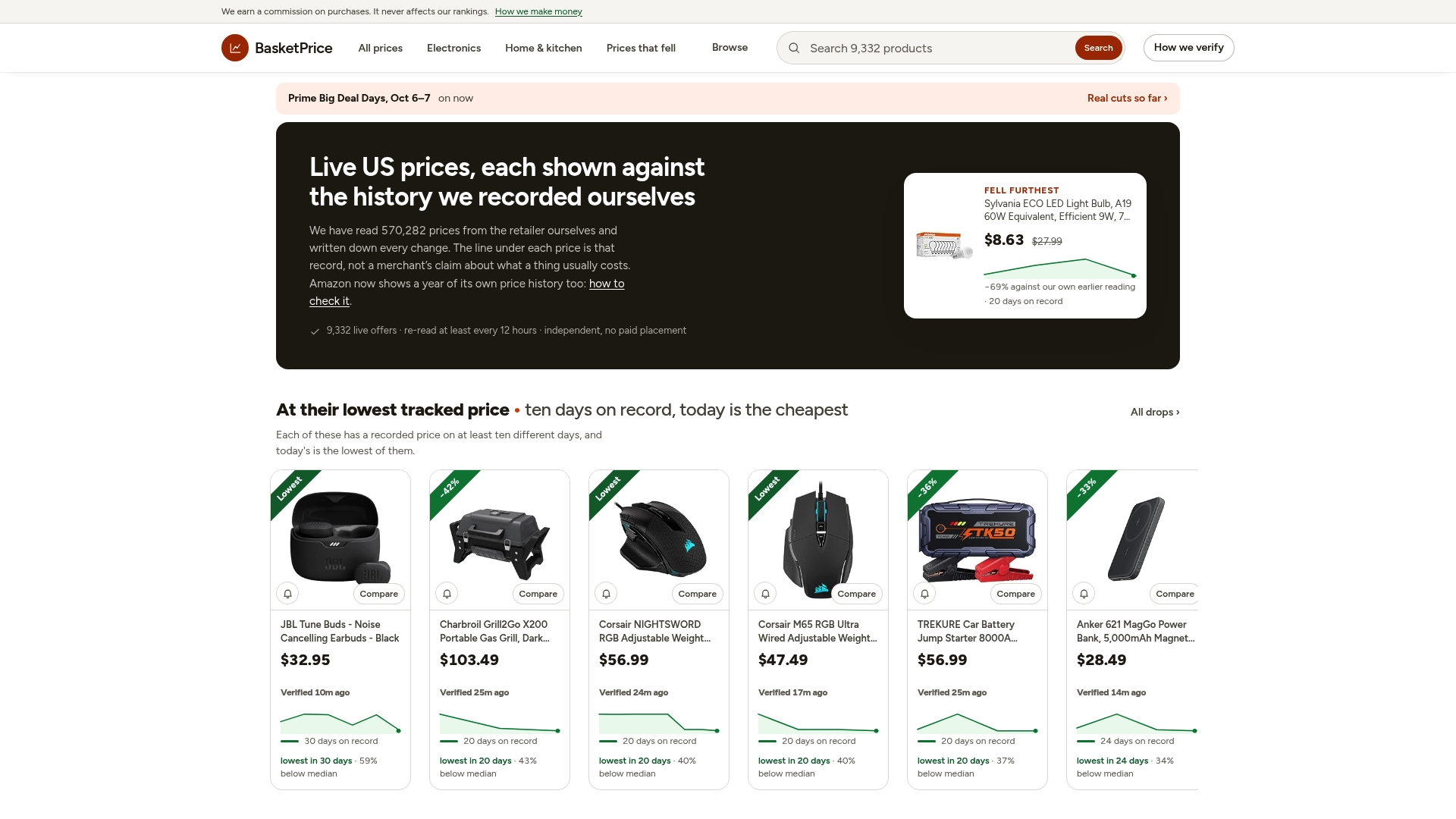
BasketPrice earns a commission when you buy through our links after tracking an item. That doesn't change what the records show, because they come from our own readings.
A simple routine for any Target purchase
Here's the routine we'd follow for anything over about $50:
- Find the exact item and note today's price in the app set to your store.
- Pull up its price history from a tracker or extension. Note the 90-day and 365-day lows.
- Check whether the same item is available elsewhere, and what that record shows.
- Set an alert at your target price.
- Buy when the alert fires, then keep the receipt for the 14-day match window.
- If the price drops again within 14 days, request the adjustment.
For unit-price products such as pantry items and cleaning supplies, add one step: compare cost per ounce or per count, not the shelf price. Our guide to comparing unit prices online shows how history helps there too.
FAQ
Does Target show price history on its website or app?
Target's product pages show the current price and sometimes a reference price, not a chart of past prices. For a timeline, use a browser extension, a tracker that accepts Target links, or a log you keep yourself. Record the store and whether you used the app or the site.
Is a crossed-out price on Target a real discount?
Not automatically. The FTC's guidelines say a former price should have been offered regularly for a reasonably substantial period, but there's no federal rule on how long a sale can run. Compare the sale price with the item's lowest price over the last 90 days and year.
Why is the price different in the Target app and in the store?
The app uses location data, and clearance pricing can be set store by store. Business Insider reported that in-store app prices resembled store prices, while away from the store they matched Target.com. Always note which store was selected when you record a price.
Can I get money back if a Target price drops after I buy?
Often, yes, within limits. Target ended competitor price matching on July 28, 2025, but an eligible identical item bought in the past 14 days can be matched to a lower Target.com or local store price. Check Target's price match page for current terms.
Sources
- How Buyers Can Beat Sellers By Tracking Price Changes (AARP)
- "Fake" Sales Trick Customers at Major Stores, Study Says (NBC News)
- Are Prime Day Deals Actually Cheaper? (DealsDasher Blog)
- How to Scrape Target Product Data (SparkProxy)
- Target App Prices Go Up in Stores (Business Insider)
- Target ends longtime price-matching policy: What to know (ABC News)