
The best time to buy an air purifier is usually Black Friday through Cyber Monday in late November. The runner-up is late summer into September, when retailers clear out warm-weather stock. The worst time is spring, and any week when wildfire smoke or allergy season is already making headlines. If you are reading this in mid-November, the biggest window of the year is only a couple of weeks away.
Below is the full calendar, what each sale window has actually delivered, how to tell a real discount from a painted-on one, and what to do if you cannot wait.
TL;DR
- Best overall: Black Friday and Cyber Monday. Roundups report typical discounts of 30 to 50% on air purifiers in this window, with the deepest cuts on premium units.
- Best runner-up: late August through September, when Consumer Reports lists air purifiers among products that go on deep discount.
- Avoid: March to May (allergy peak) and the days after a wildfire event, when popular models sell out and prices firm up.
- Verify every deal: compare today's price with the recorded 90-day and 365-day lows for the exact model, not with the "was" price on the listing.
Table of Contents
- The air purifier price calendar at a glance
- Why Black Friday and Cyber Monday win
- The runner-up: late August through September
- Prime Day, Memorial Day and Labor Day
- When not to buy: allergy and wildfire spikes
- How to tell a real deal from a fake discount
- What a good price looks like
- Perspective: why we track purifier prices ourselves
- Your plan if you are buying this season
- Track air purifier prices with Basketprice
- Frequently asked questions
- Sources
The air purifier price calendar at a glance
Air purifiers are seasonal products. Demand rises with pollen, wildfire smoke and closed-window winters, and retailers price accordingly. The pattern below combines what Consumer Reports, deal editors and shopping guides report for the US market.
| Period | What usually happens to prices | Buy or wait? |
|---|---|---|
| January to February | Clearance pricing as retailers make room for new models | Good for last-year models |
| March to May | Highest prices of the year, popular models can sell out | Avoid unless you need one now |
| Memorial Day (late May) | Solid sales, but usually shallower than Black Friday | Fine if you need it before summer |
| June to July (Prime Day) | First real cuts of the year, strong on mid-range units | Good, especially for mid-range |
| Late August to September | Clearance and pre-fall discounts, full selection | Very good |
| October to mid-November | Demand climbs (ragweed, smoke, closed windows), prices firm up | Wait if you can |
| Black Friday to Cyber Monday | Deepest cuts, especially on premium units | Best time of the year |
Treat this as a pattern, not a promise. Each year's discounts depend on the model, the retailer and what is happening with air quality that season.
Why Black Friday and Cyber Monday win
Two things line up in late November. Retailers compete hard on electronics and home goods, and the weather has not yet pushed demand to its peak, so they can afford to cut.
A January 2026 roundup of air purifier deals puts the usual Black Friday and Cyber Monday discount at 30 to 50% off, with January and February also seeing clearance pricing as new models arrive. Another buying guide lists late-November sales alongside Prime Day, Memorial Day and Labor Day as the moments retailers most often discount purifiers.
How deep can it go? In 2025, HouseFresh's Black Friday roundup found air purifier deals from November 20 onward with discounts from 10% to 42%, and Amazon's Black Friday deals ran November 20 to 28. Deals that did not sell out usually ended by the end of the month. An Amazon announcement from 2023 shows the same shape: a long run of early deals that built toward Cyber Monday, with new offers appearing as often as every five minutes in some periods.
Two practical takeaways:
- Black Friday is no longer one day. Early deals start well before Thanksgiving week, and some of the best prices appear on the first day, not the last.
- Popular models sell out. If your short list is a top-selling compact unit, set an alert for it now rather than hoping to catch it on the day.
On timing within the sale season, one company blog comparing seasonal sales notes that air purifiers behave differently from portable air conditioners: Black Friday usually beats Memorial Day on purifiers by 10 to 20%, while Memorial Day is the last reliable major-discount window for cooling products before summer. If you are shopping for both, buy them at different times of year.
The runner-up: late August through September
If you missed November, September is the next best moment. Consumer Reports lists air purifiers among the products on deep discount in September, linked to the seasonal shift from summer to fall, when allergies can hit hard. Its late-August guide to what to buy in September adds that retailers clear warm-weather inventory as summer winds down, and that if you do not need an item right away, waiting for Black Friday and the holiday sales usually pays.
The advantage of September over November is selection. A seasonal calendar from a deals site recommends late August to September because discounts return before fall demand builds and the full range of models is still in stock. The same calendar says prices firm up from October to mid-November, thanks to ragweed, smoke and people closing their windows.
Prime Day, Memorial Day and Labor Day
The mid-year events matter too, especially for mid-range models.
- Prime Day (summer). CNN Underscored reported air purifiers up to 44% off during Prime Day 2026, including a Coway model at 40% off and a 50-pound whole-home unit at 37% below its typical $1,000 price.
- Memorial Day. The Spruce, which has tested more than 78 air purifiers, notes that purifiers at any price point can typically be found on sale around Memorial Day, Black Friday, Cyber Monday and Prime Day, sometimes at nearly half the original price.
- Labor Day. It sits at the tail of the late-summer clearance period and is a reasonable alternative if you want a purchase in hand before fall allergies.
If you are choosing between them, the pattern is simple: mid-year events are good, but the November window tends to beat them.
When not to buy: allergy and wildfire spikes
Prices follow fear and pollen counts. The worst stretch is spring, when peak allergy demand can leave popular models out of stock. Wildfire events do the same thing faster.
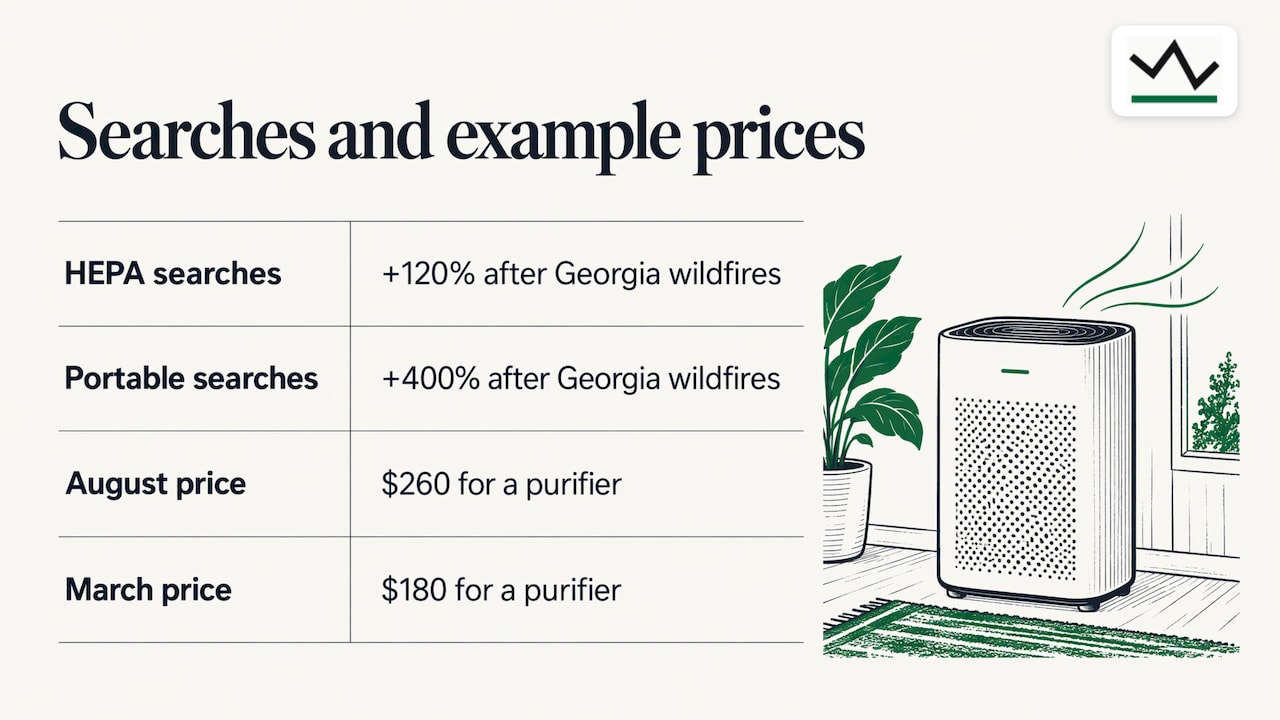
The Raleigh News & Observer reported in May 2026 that after the Georgia wildfires of April, searches for "hepa air purifier" jumped 120% in South Carolina and searches for "portable air purifier" climbed 400%. The same piece notes that a purifier costing $260 in August can be a $180 purchase in March, and advises stocking up in late winter or early spring, when shelves are full and prices have not caught up to demand.
That is the key idea: the best time to buy is before the crowd needs one. If you live in the West, or anywhere that gets smoke, treat the late-fall sales as your fire-season preparation, and buy replacement filters at the same time, because they also sell out when smoke arrives.
One safety point belongs here. A purifier is a supplement to avoiding smoke, not a replacement for official guidance. During a smoke event, follow your local air quality agency's advice, keep windows closed and use your purifier in the room where you spend the most time.
How to tell a real deal from a fake discount
A big red percentage tag proves little. Retailers choose the "original price" they compare against, and it may be a price the product rarely or never sold at. A real deal is measured against what the product has actually cost recently.
Here is a quick check that takes about a minute:
- Open the exact product page and copy the model number, not just the name.
- Look at the recorded price history for that item. A shopping guide on spotting fake sales recommends comparing today's price with the usual recent price and the lows.
- Match the configuration. The same guide warns that listings with near-identical names may differ in size, color, model year, accessories or warranty terms, so a cheaper past price for another version does not prove today's offer is poor.
- Check the lows. A price at or near the 90-day and 365-day low is a strong signal. A price above both is a "sale" in name only.
We walk through the method in more detail in our guide to checking price history with 90-day and 365-day lows. If you are comparing purifiers with different filter sizes or room ratings, our guide to comparing unit prices using price history shows how to put them on equal footing.
Even major publishers use this method. CNN Underscored's deals team says it verifies discounts by comparing historical prices with the current price using a price tracker before featuring a deal.
What a good price looks like
Prices vary a lot by size and brand, so use ranges as a sanity check, not a target. The Spruce says the best air purifiers it tested range from about $150 to $270, with some as low as $50 and others as high as $750. Memorial Day 2026 examples reported by one deals blog included mid-range units at roughly 22 to 36% off.
A few ways to size up the number you see:
- Small desk and bedroom units usually cost $40 to $90 and, according to that seasonal calendar, become a genuine bargain when they dip below $40 on sale.
- Mid-range room units are where Prime Day and Memorial Day are strongest, and where a Black Friday price can still beat them.
- Premium and whole-home units see their deepest cuts at Black Friday and Cyber Monday.
Then add the ongoing cost. The same calendar says replacement filters cost $30 to $80 a year and are the expense people forget, and advises checking the filter price before you buy the machine. A $20 saving on the unit disappears fast if filters cost double.
Perspective: why we track purifier prices ourselves
We built Basketprice around one belief: a discount should be measured against what a product has actually sold for, not against a number the merchant picked.
That is why our price records come from our own readings, not from merchant claims. For a seasonal product like an air purifier, this matters more than for most. Prices swing with allergy season, wildfire news and holiday events, so a "40% off" label in October can be a worse price than a quiet Tuesday in September.
Our alerts are designed for the way people actually buy. You can get browser notifications with no sign-up, set a price-drop alert for the exact model you want, and use our back-in-stock notifications for the units that sell out at peak times. We also offer a trigger for price drops after you buy, so you can act while you are still inside the return window.
The best purchase is the one you planned: pick two or three models, watch their recorded lows, and buy when the price meets or beats them.
Cleaning
Your plan if you are buying this season
It is November 10, 2026, so the Black Friday window is close. Here is a simple way to use it.
- Pick the room and the size. Match the purifier's rated room size to your space. A unit rated for a bedroom will struggle in an open-plan living area.
- Shortlist two or three exact models and note the filter type and yearly filter cost for each.
- Record the lows. Look up each model's 90-day and 365-day lows.
- Set alerts at or slightly above those lows for each model, and add back-in-stock alerts for popular ones.
- Buy at or near the low, and check whether a post-purchase drop is possible inside the return window.
- Order filters early if you live in a smoke-prone area.
If an urgent need arrives first, such as a smoke event or a newborn's room, buy now. The few dollars you might save by waiting are not worth weeks of poor air.
Track air purifier prices with Basketprice
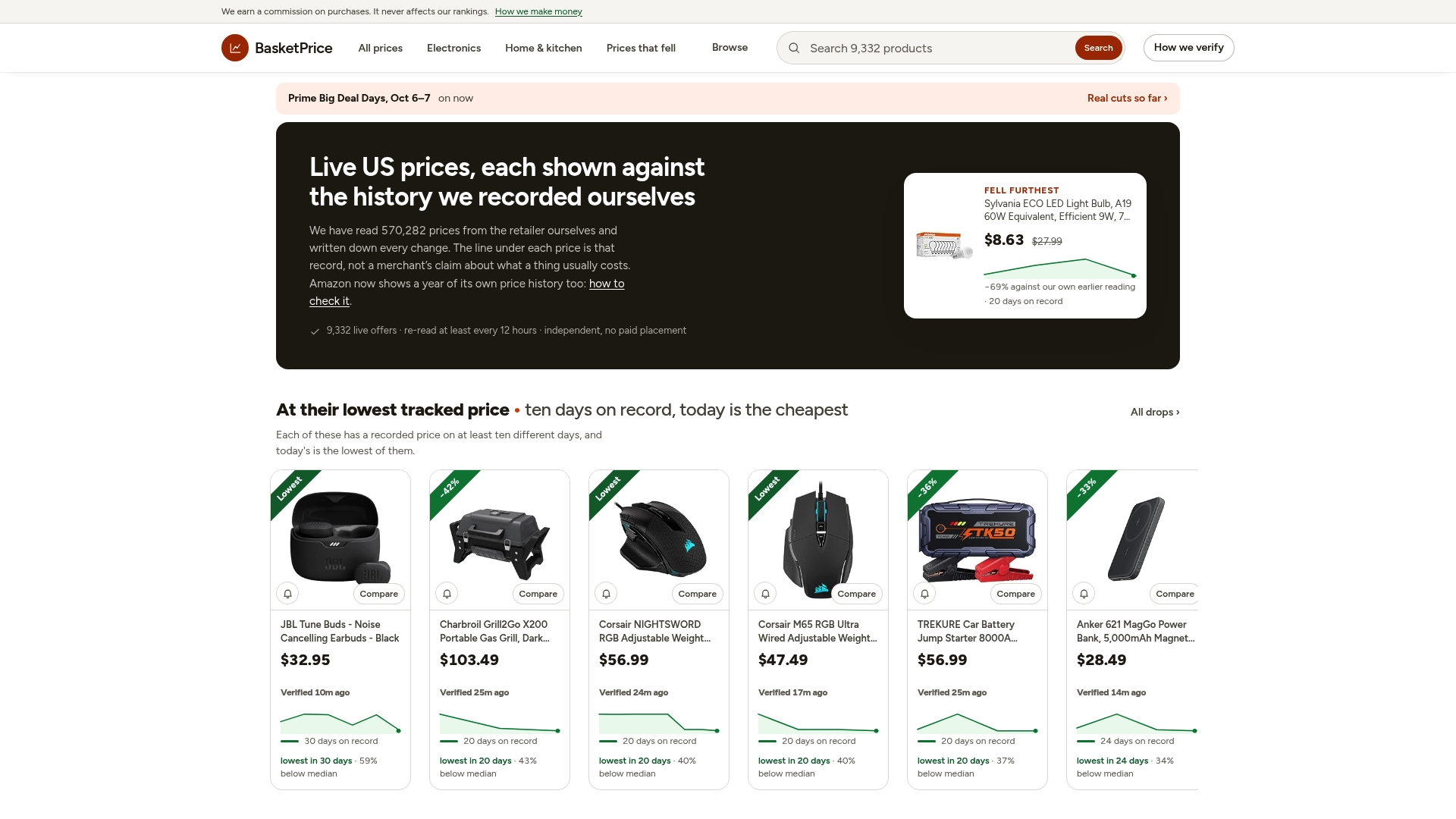
We monitor prices across major online retailers, primarily Amazon, and keep our own price history so you can see whether a deal is real. You can browse current air purifier deals and recorded lows, track the exact model you want, and get an alert when it drops.
If you are also shopping for related home air gear, our pages for humidifier deals, dehumidifier deals and air quality monitor deals follow the same recorded-low approach. For everything else, start from the Basketprice home page.
Frequently asked questions
What month are air purifiers cheapest?
November is usually the cheapest month, because Black Friday and Cyber Monday bring the deepest discounts, commonly reported at 30 to 50% off. September and January to February are good alternatives, thanks to seasonal and new-model clearance. March to May is typically the most expensive stretch.
Is it worth waiting for Black Friday to buy an air purifier?
Usually yes, if you do not need one right away. Consumer Reports advises that waiting pays off when an item is not urgent, since the holiday sales follow late-summer clearance. If smoke or heavy allergy symptoms make the purchase urgent, buy now and check the price history to avoid overpaying.
Do air purifier prices go up during wildfire season?
Often they do, and stock can run short. Local demand spikes during wildfire or allergy events can reduce discounts and availability, so it is better to buy before the season. Get replacement filters at the same time.
How do I know if an air purifier sale price is real?
Compare the price with the exact model's recorded history, including its 90-day and 365-day lows, and ignore the "was" price on the listing. Make sure the history matches the same size, model year and accessories. A price at or near the recorded low is a real deal.
Can I use an air purifier in winter?
Yes. Windows stay closed, so dust, pet dander, cooking fumes and fireplace smoke can build up indoors. That is why demand, and prices, climb in the fall, and why buying earlier tends to cost less.
Sources
- Consumer Reports: 20 products on deep discount in September
- WAFB: What to buy in September 2026
- Brostrick: air purifier sales and seasonal calendar
- AirPurifierFAQ: when do air purifiers go on sale
- Of Zen and Computing: air purifier deals roundup
- HouseFresh: Black Friday air purifier deals
- Amazon: Black Friday 2023 overview
- CNN Underscored: air purifiers for Prime Day 2026
- The Spruce: the best air purifiers
- News & Observer: wildfires and HEPA purifier sales
- ShoppingAllAbout: how to tell if a sale is a real deal